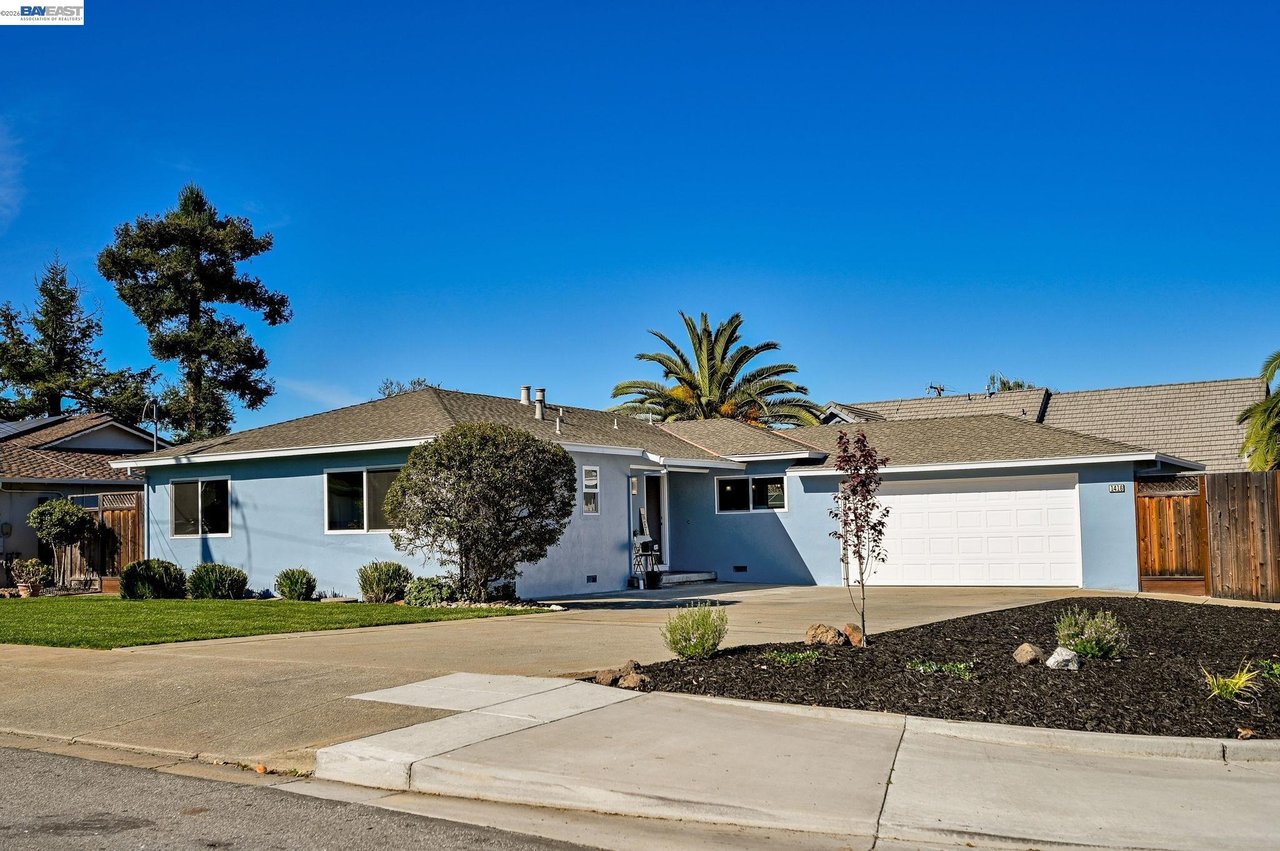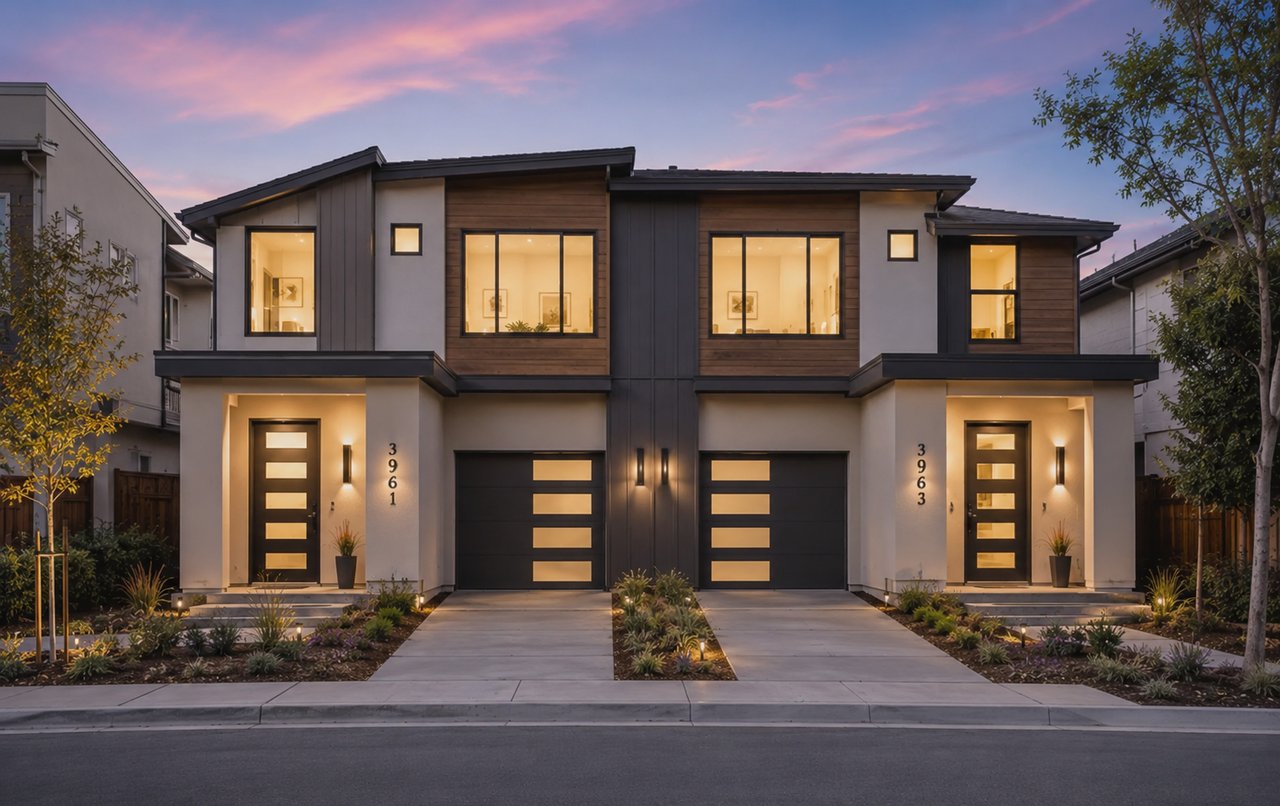
Search "duplex for sale Fremont CA" and most results are single-family advice with a different headline. Almost nothing is written for someone trying to figure out if a Fremont multi-family property cash flows.
That gap is the reason for this guide. If you're an investor, a landlord, or a first-time buyer weighing house hacking, you're asking a fair question: does a duplex or small multi-family building in Fremont pencil out, or is it just a pricier way to buy a home?
This post covers Fremont multi-family properties and duplex investing from the numbers side: cap rate, cash flow, financing for 2 to 4 unit buildings, house hacking, landlord rules, and property management. It's written from the investment side of the business, not renovation. For a distressed single-family fixer instead, our Fremont buyer and seller checklist covers that ground.
Why Fremont Multi-Family and Duplex Properties Deserve a Second Look
Most local real estate content in Fremont skips multi-family and duplex property entirely, since single-family homes make up most of the inventory and most agents only work that side of the market.
That leaves a real gap for investors, and it's part of why a true Fremont investment property realtor is hard to find. The Fremont rental market sits inside one of the strongest rental demand pockets in the Bay Area, driven by tech employment and BART access, and that demand doesn't disappear because local content ignores it.
Multi-family inventory here is limited relative to demand. Duplexes, triplexes, and small apartment buildings don't come up for sale often, and when they do, they move fast.
Set expectations early too. At Fremont's price levels, a multi-family investment property is more often a long-term equity and appreciation play than a high-cash-flow play.

Meet Your Investment-Focused Fremont Realtor
Neena Pattar leads a real estate team with Golden Gate Sotheby's International Realty, serving Fremont, San Jose, and Los Gatos. She's worked with Bay Area buyers and sellers since 2011, and in 2025 she ranked among Fremont's top-producing agents by sales volume and transactions.
Before becoming a Realtor, Neena worked the investment side of real estate: acquiring distressed properties, managing renovations, and repositioning homes for resale profit. That background means she reads a deal like an investor first, checking the numbers before the curb appeal. She's also a Certified Negotiation Expert, a credential that matters most on multi-unit deals.
Most Fremont agents rarely touch multi-family or duplex transactions. Neena's team is one of the few that actively works with landlords, house-hackers, and small investors on this property type, and her Fremont agent bio page covers more of that background.
Understanding Fremont's Multi-Family and Duplex Market
Multi-family property covers a range of building types. A duplex is two units on one parcel, a triplex holds three, a fourplex holds four, and beyond that you're generally into small apartment buildings and commercial financing territory.
Zoning, permitted unit counts, and ADU rules vary parcel by parcel in Fremont, and they change over time. Don't assume a property's current use tells you what's allowed today. Confirm current zoning, permitted unit counts, and ADU potential directly with the City of Fremont Planning Division before you write an offer.
Buying a duplex in Fremont usually means buying an older building, since new multi-family construction here skews toward larger apartment developments built by institutional owners, not the small, individually owned duplex or fourplex most investors want.
Where Fremont Multi-Family and Duplex Opportunities Are More Likely to Exist
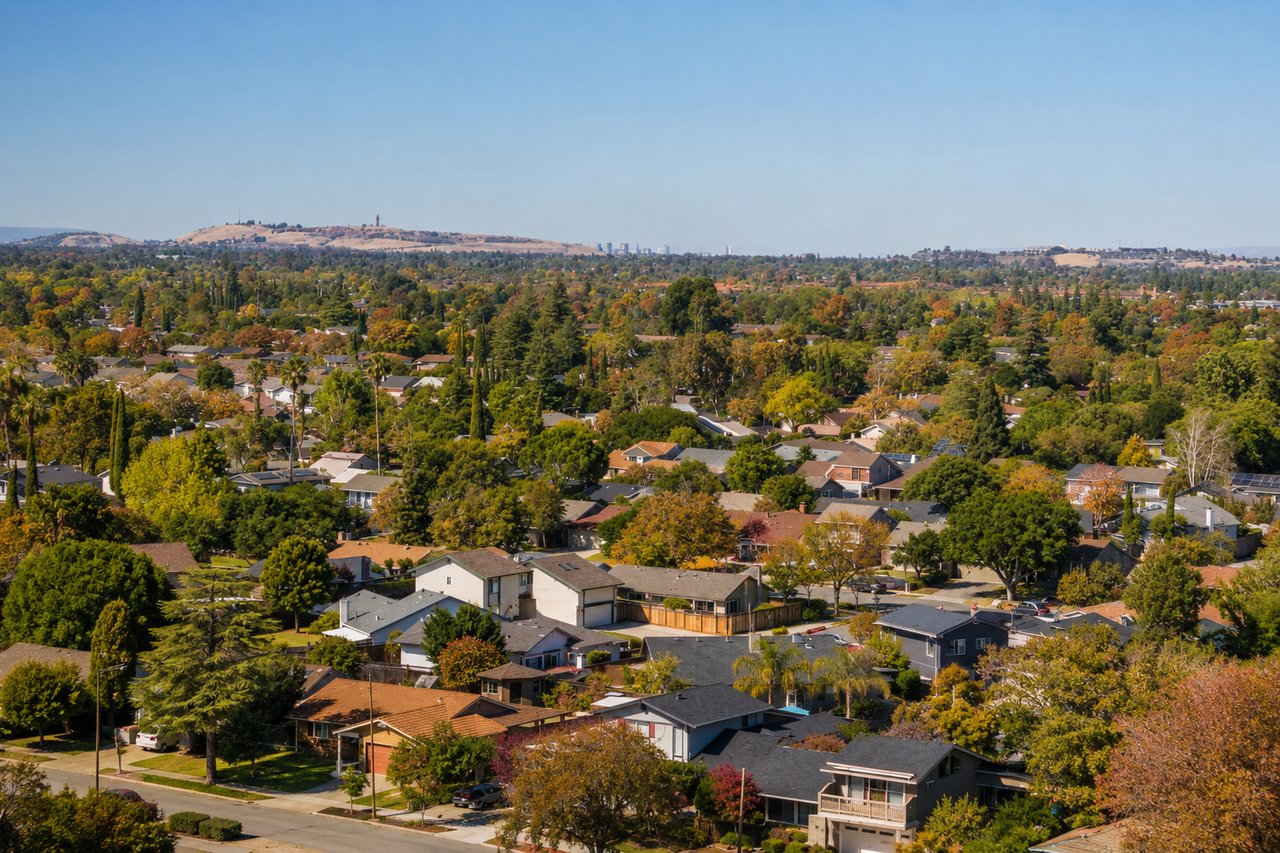
Fremont's older neighborhoods carry the best odds of turning up a duplex or small multi-family building, simply because of when they were built. Niles, Centerville, and Irvington all developed earlier than the newer subdivisions on the flatlands, and older development eras produced more mixed housing types.
That's an observation about housing age, not a zoning promise. A duplex candidate in Niles or Centerville still needs its own zoning and unit-count check with the city. Our Fremont neighborhood guide is a good starting point before you dig into a specific address.
The investment angle here differs from a renovation angle. What matters for a rental property is rental demand, tenant profile, and proximity to transit and job centers, not how much charm the building has. Niles draws a different renter than Centerville, and Irvington's larger lots support a different tenant mix.
Investment Fundamentals: Cash Flow, Cap Rate, and ROI in a High-Cost Market
What Cap Rate Means and Why Bay Area Rates Run Low
Cap rate is net operating income divided by purchase price, a quick way to compare properties regardless of financing.
Fremont and Bay Area cap rates run compressed compared to the national average, since prices here are high relative to achievable rents. A property with a strong cap rate in a lower-cost metro can look thin in Fremont, even with solid rental income. That doesn't make a deal bad, but cap rate alone isn't the whole story here.
Calculating Realistic Cash Flow in Fremont
Cash flow starts with rental income, then subtracts real operating costs before you reach the mortgage payment: gross rental income across all units, a vacancy allowance, property taxes and insurance, a maintenance reserve, and property management costs if you hire one.
What's left after debt service is your real cash flow, and in Fremont, that number runs thinner than new investors expect. You'll hear about the "1% rule," the idea that monthly rent should equal roughly 1% of purchase price. Treat it as a rough screening tool only, not real underwriting.
Cash Flow vs. Appreciation: Setting the Right Expectations
Plenty of Bay Area multi-family purchases get underwritten for appreciation and equity growth first, with cash flow treated as a secondary bonus. That's a legitimate strategy, but only if you go in with your eyes open about it.
Neena's team has seen the same pattern come up more than once with first-time investor clients: someone runs the numbers on a Fremont duplex expecting cash flow like a rental in a cheaper market, gets discouraged when the math doesn't match, and nearly walks away from a property that made sense as a long-term equity play. Sometimes the fix isn't a different property. It's a different set of expectations.
If you already own a Fremont property and are weighing whether to roll the equity into a multi-family purchase, a Fremont home valuation is a reasonable first step.
Financing a Duplex or Multi-Family Property in Fremont
Owner-Occupied Financing: The House Hacking Path
FHA and conventional loans let an owner-occupant buy a 1 to 4 unit property with a lower down payment than an investment-only loan requires, as long as you live in one unit, which is a big part of what makes buying a duplex in Fremont attainable for a first-time house-hacker. The FHA Section 203(b) program is the government-backed option most house-hackers ask about first. Lenders may also count a portion of projected rental income from the other units toward your qualifying income, though rules vary by lender.
Investment-Only Financing
If you don't plan to live in the property, financing rules change. Conventional investment loans typically require 20% to 25% down or higher, with stronger reserve requirements, and properties with five or more units generally move into commercial financing territory. Terms shift over time, so confirm current numbers with a lender before budgeting.
House Hacking in Fremont: Live in One Unit, Rent the Other
House hacking is simple in concept. Buy a duplex or small multi-unit property, move into one unit, and rent out the rest. The rental income helps offset your mortgage, sometimes covering a large share of the payment.
This strategy fits buyers comfortable being a hands-on, on-site landlord, popular with first-time buyers trying to lower housing cost while building equity. Fremont's rental demand makes finding a tenant realistic, even if the numbers lean toward appreciation over pure cash flow.
It doesn't fit everyone. If privacy matters most to you, sharing a building with a tenant isn't the right setup, since house hacking ties directly back to the lower down payments and better terms available on a Fremont duplex through FHA and conventional owner-occupied loans.
What Fremont Landlords Need to Know About Rent Rules
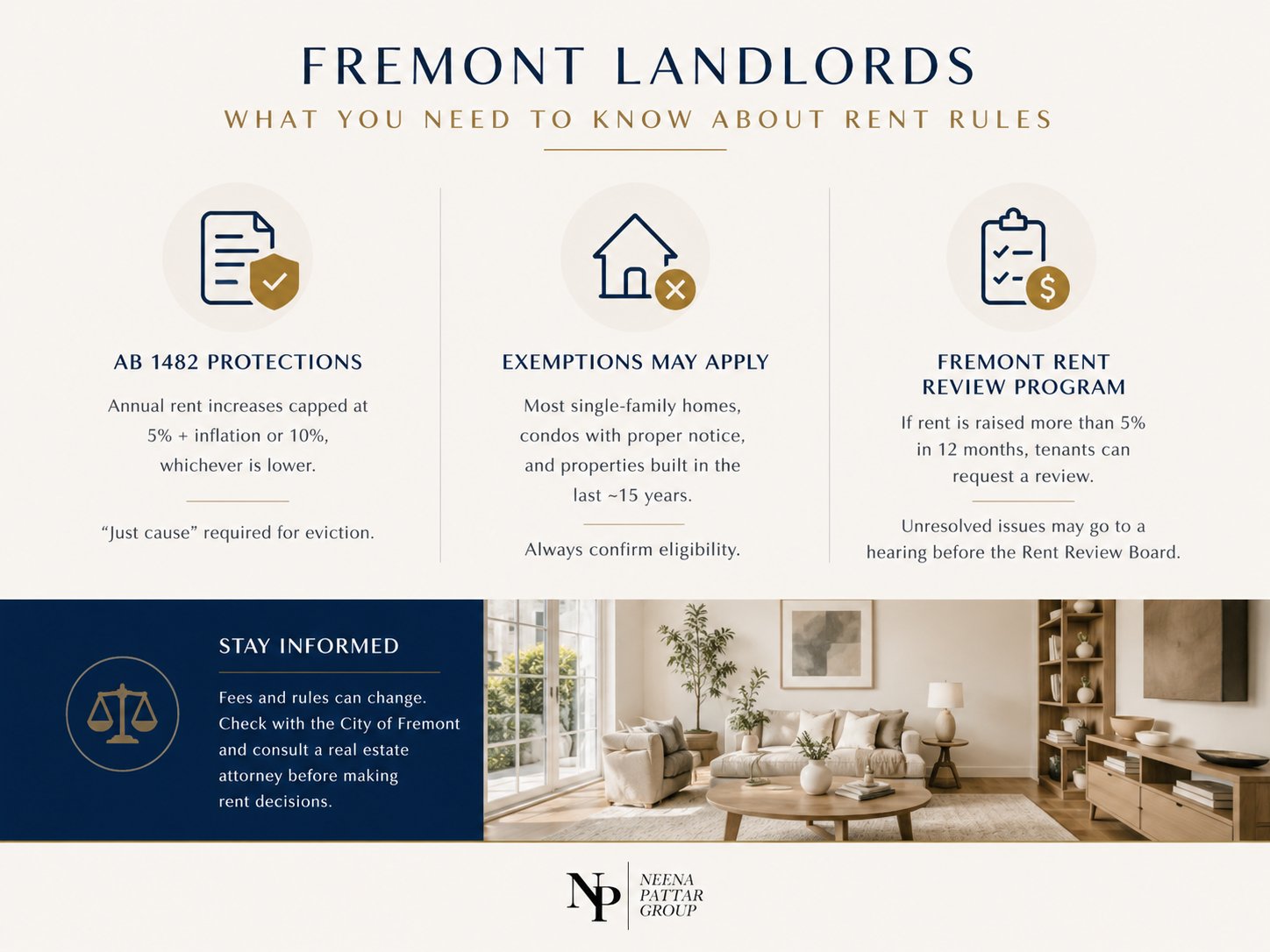
California's statewide Tenant Protection Act, known as AB 1482, applies to most rental housing across the state, including a large share of Fremont's rental units. It caps annual rent increases at 5% plus the local rate of inflation, or 10%, whichever is lower, for tenants who've lived in a unit 12 months or more, and requires "just cause" for eviction, with relocation assistance owed in no-fault situations.
Exemptions exist, including most single-family homes and condos owned by individuals who use the required lease notice language, and properties built within roughly the last 15 years. Don't assume an exemption applies to your property without confirming it. The California Tenants Guide from the Judicial Council of California is a useful starting reference.
Fremont also runs its own local process on top of state law, the City of Fremont Rent Review Program. This is not rent control, and Fremont doesn't cap rent the way San Francisco, Berkeley, or Oakland do. If a landlord raises rent more than 5% within any 12-month period, the tenant can request a review, and if unresolved, a hearing before the city's Rent Review Board.
Program fees and exemptions can change, so any Fremont landlord should confirm current requirements with the city and, ideally, a real estate attorney before setting or raising rent.
Property Management Basics for First-Time Fremont Landlords
New landlords entering the Fremont rental market face a real choice: self-manage or hire a property manager. Self-managing saves money but costs time, since you're the one fielding a call about a broken water heater at ten at night. A property manager costs a share of rental income but buys back your time and tenant experience.
A few basics matter either way. Screen tenants properly, checking income, rental history, and background before signing a lease. Build a maintenance reserve instead of treating repairs as a surprise, and carry landlord insurance, which differs from a standard homeowner's policy.
Set up a clear rent collection system and put lease terms and maintenance procedures in writing. Vague verbal agreements cause most disputes that land landlords in front of a rent review board or in court.
Tax treatment of rental property, including depreciation and allowable deductions, follows its own rules. IRS Publication 527 on residential rental property covers the general framework, though it's not a substitute for advice from your own tax professional.
Common Mistakes First-Time Fremont Multi-Family Investors Make
A few patterns show up again and again with new investors looking at Fremont multi-family properties. Underestimating total ownership costs is the first, since insurance, maintenance, vacancy, and property management add up fast on a multi-unit building.
Chasing cash flow that rarely exists at Fremont price points is the second, instead of planning for an appreciation-driven strategy. Skipping a proper inspection on an older building is the third, where deferred maintenance in one unit hides behind fresh paint in another.
Assuming zoning or ADU potential without confirming it with the city is the fourth. Overlooking landlord notice and rent review obligations is the fifth.
Working with an Investment-Focused Fremont Realtor
Buying a Fremont multi-family investment property calls for a Fremont investment property realtor who understands the numbers behind the deal, not just the market comps. Neena's investment background means she evaluates a duplex or fourplex the way an investor would, weighing rental income, condition, and long-term potential before she gets to negotiating terms.
Her Certified Negotiation Expert credential adds real weight on multi-unit offers, where negotiations involve more moving pieces than a standard single-family sale. She also has connections that can surface off-market opportunities in a segment where good inventory rarely stays listed long. Her team keeps an updated Fremont home search and listings page worth checking regularly.
Frequently Asked Questions
Is buying a duplex or multi-family property in Fremont, CA a good investment in 2026? It can be, mainly as a long-term equity and appreciation play, since most Fremont multi-family properties won't match a lower-cost market's cash flow. Older sections like Niles and Centerville tend to have the most options worth evaluating.
How do I finance a duplex or small multi-family property in Fremont? Owner-occupants can use FHA or conventional loans to buy a Fremont duplex with a lower down payment, as long as they live in one unit. Investors buying purely for rental income typically need 20% to 25% down or more.
Can I use an FHA loan to buy a duplex in Fremont, CA? Yes, the Section 203(b) program covers owner-occupied purchases of 1 to 4 unit properties, including a Fremont duplex, triplex, or fourplex. You need to live in one unit, and qualifying rules should be confirmed with a lender first.
What is a good cap rate for a multi-family property in Fremont/the Bay Area? Cap rates in Fremont run lower than the national average because prices are high relative to achievable rents. Compare a property's cap rate against similar Fremont multi-family properties, not a national benchmark.
Does Fremont have rent control for landlords? Fremont does not have a hard rent-control ordinance like San Francisco or Berkeley. It has a Rent Review Program that lets tenants request a hearing when a rent increase exceeds 5% in a 12-month period, on top of statewide AB 1482 rules.
What neighborhoods in Fremont have the most duplexes and multi-family homes? Niles, Centerville, and Irvington tend to have more duplex and small multi-family buildings than Fremont's newer subdivisions, since they developed earlier. Zoning and unit potential still need confirming with the city.
How much down payment do I need for a multi-family property in Fremont? An owner-occupant using FHA or conventional financing can often put down far less than an investor buying a Fremont property purely for rental income, where 20% to 25% or more is common.
What is house hacking, and does it work in Fremont's housing market? House hacking means buying a duplex, living in one unit, and renting the rest to offset your mortgage. It works in Fremont for buyers comfortable being a hands-on landlord and offers a realistic path to owner-occupied financing.
Should I hire a property manager or self-manage my Fremont rental property? It depends on how much time you have and how comfortable you are handling tenant calls and rent collection. Many first-time Fremont landlords self-manage a single duplex, then bring in a property manager as their portfolio grows.
Is it better to buy a duplex to house hack or a stand-alone rental property in Fremont? A duplex bought to house hack usually offers better financing terms and a lower barrier to entry for a first-time Fremont buyer. A stand-alone rental property can make sense once you have equity, but it needs investment-level financing.
Talk to a Fremont Realtor Who Understands Multi-Family Investment
Landlords and small investors looking at Fremont multi-family properties deserve an agent who runs the numbers before falling for a listing. Neena's investment background, paired with her Certified Negotiation Expert training, gives her a different lens on duplex and small multi-family deals than a typical single-family-focused agent.
If you're weighing a Fremont duplex, a fourplex, or your first house hack, reach out to Neena Pattar Group at (510) 605-0656 or through the Fremont real estate contact page to talk through what pencils out for your goals.